


Tomb Busters in-depth experience: a screaming golden collaboration, why can a horror game be turned into a party comedy?
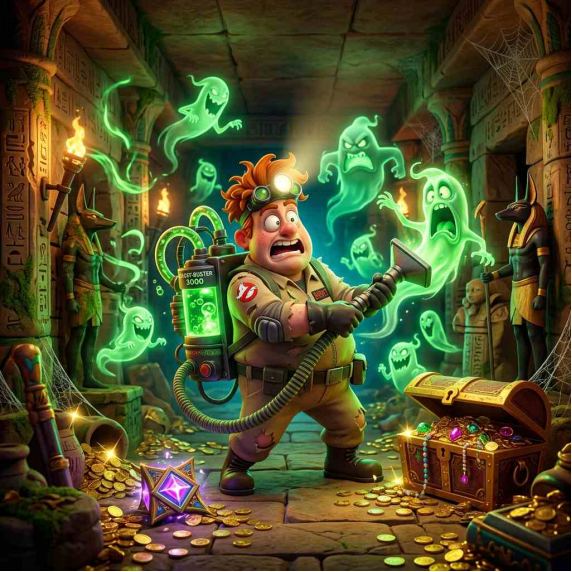
If you just look at the name, Tomb Busters can easily be mistaken for another ordinary tomb exploration mobile game: enter ruins, find treasures, avoid traps, fight monsters and escape. But what really makes it frequently discussed after its overseas launch in 2026 is not the "tomb theme" itself, but its combination of horror, evacuation, multi-voice and absurd comedy.
This multiplayer cooperative horror evacuation game launched by Giant Games / Giant Network, the overseas version will be launched on iOS, Android and PC platforms around May 27, 2026. The official positioning of it is very straightforward: a mobile cooperative horror evacuation game that supports cross-platform play on PC. In other words, it does not simply scare you in the dark, but allows you to enter dangerous ancient tombs with your friends, pick up treasures, take the blame, and run for your life, and finally laugh out the fear as an accident review in the voice.
What kind of game is Tomb Busters?
The core setting of Tomb Busters is dramatic: players are not lone explorers in the traditional sense, but employees of the "Supernatural Company." Your job description sounds like a high-risk outsourcing contract: enter unknown ruins, collect rare treasures, avoid traps and monsters, and evacuate before the situation gets out of hand.
Its gameplay can be summarized in four keywords:
· Exploration: Find routes, treasure chests, mechanisms and extraction points in the dark tombs.
· Cooperation: Team up to four people, with different roles and tools responsible for reconnaissance, support, combat and transportation.
· Evacuation: Obtaining the treasure does not mean victory, only taking it out alive is considered a gain.
· Loss of control: Monsters, weather, traps, weights and the greed of teammates will constantly disrupt the plan.
The most ingenious thing is that the game experience changes with the number of people. When played alone, it is closer to a horror adventure with a strong sense of oppression; when two people form a team, the atmosphere becomes an adventure that takes care of each other; with three people, it starts to resemble a tense treasure hunt; when there are four people in the team, the sense of horror is often turned into a comedy by unexpected situations. One person will be nervous when hearing footsteps, but four people will probably argue about "who took something randomly again" when they hear footsteps.
Why is its horror more than jump scares?
The horror of Tomb Busters relies not just on sudden shots in the face, but on a system that continuously creates tension. The view of the ancient tomb space itself is limited, and the environment contains candlelight, stone walls, mechanisms, footsteps, intercom noise and distant whispers. These elements will constantly remind players: you are not visiting a scenic spot, you are in a dangerous scene where the profits will be wiped out at any time.
More importantly, the enemies in the game are not pure health units. Official and related reports have mentioned a variety of monsters with a Chinese folk horror flavor, such as ghost brides, fox demons, queens, puppets, zombies, and special enemies that will disguise themselves as players. Their purpose is not just to chase you, but to disrupt the team's judgment: is a teammate alone, or is there something pretending to be a teammate?
This type of design is especially effective for multiplayer games. Because horror games are most afraid of players getting "accustomed", but multi-player cooperation will naturally create variables. Some people want to get more treasures, some forget to check the evacuation route, some are scared by monsters and run around, and some trigger new mechanisms to save teammates. With just a push of the system, the team will perform an entire episode of chaos on its own.
The key to evacuation gameplay: greed will become heavier
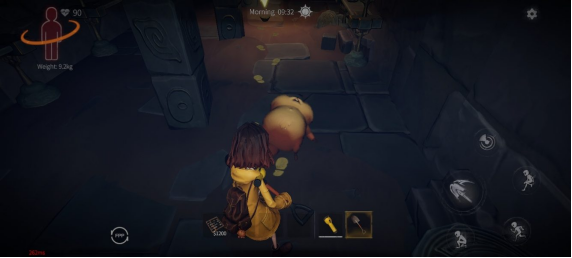
The most suitable thing about Tomb Busters as a reminder for newbies is its load-bearing and evacuation logic. The more treasures there are, the more attractive the benefits will be, but carrying items will also affect the efficiency of the action. In other words, greed is not an abstract character problem, but will directly become a weight on your legs.
This makes every trip into an ancient tomb a risk assessment:
| decision making | benefit | risk |
| Evacuate in advance | Stably maintain existing profits | May miss high-value treasures in the depths |
| Continue to go deeper | Higher reward limit | The enemy is more dangerous and the escape route is longer |
| Get more treasures | Higher single-game income | Increased movement pressure, making it easier to catch up |
| Search separately | Explore more efficiently | The cost of rescue after placing an order is extremely high |
| Concentrate action | More secure, high fault tolerance | Search speed is slow and it is easy to miss the time window |
The advantage of this mechanism is that it makes "going back alive" more important than "finding treasures". Many novices overturned for the first time, not because they didn't know how to operate, but because they underestimated the evacuation process: the road was very short when entering, and the backpack was heavy when coming out; teammates were there when entering, and when coming out, some people were shouting for help, some were asking about the exit, and some were explaining "I really just took one more".
How to play as a novice?
If you are new to Tomb Busters, it is not recommended that your first goal is to earn high profits. This game is more like an "information gap game": the more familiar you are with the map, monster behavior, tool usage and evacuation rhythm, the more stable your income will naturally be. The most important thing in the first few games is to establish a habit.
First, remember the exit and the way back.
Once you enter the tomb, don't just focus on the treasures. Every time you pass through obvious terrain, doorways, forks, and government areas, you must leave an impression of the route in your mind. When you can't find the exit, no matter how expensive the treasure is, it's just a burial gift.
Second, stay apart less and communicate early.
The efficiency of multiplayer cooperation comes from division of labor, but premature dispersion in the novice stage often turns the game into a continuous rescue. A more stable approach is to act in pairs, and report treasures, monsters, mechanisms, and exits in a timely manner.
Third, don’t save the tools until the end.
The value of reconnaissance, lighting, support and escape tools lies in mitigating risk in advance. Many players will save props for the "critical moment". As a result, they have been chased and have no room to operate at the critical moment.
Fourth, don’t fill your backpack before withdrawing it.
The most common lesson learned in extraction games is "get another one." When someone in the team is injured, the route is unfamiliar, and the time is close to a dangerous node, it is usually more profitable to evacuate in time than to be greedy for a high-priced item.
Fifth, practice stable profits first, and then pursue difficult routes.
The long-term fun of Tomb Busters is not betting your life every round, but the gradual withdrawal from shallow stability to the deep high-yield exploration. Only by stabilizing the basic market can we turn horror into a joke.
Which players is it suitable for?
Tomb Busters is best suited for three types of players.
The first category is for players who enjoy Lethal Company -style multiplayer accidental comedy. Its laughter is not written in the plot dialogue, but comes from the chain reaction after the player's cooperation fails: who takes too much, who gets lost, who brings the monster back, who starts to panic first in the voice.
The second category is players who like light horror but don’t want it to be too depressing. Tomb Busters has a sense of darkness, chase and monster oppression, but the character performance and multi-person interaction will dilute the loneliness of pure horror works. Players who are not very courageous may find it easier to accept it if they have friends to play black games with.
The third category is players who like evacuation and profit planning. It not only relies on operational responses, but also tests the team's judgment on routes, loads, resources, and evacuation timing. Rather than just grinding monsters, Tomb Busters emphasizes "should this trip continue?"
The people who are not suitable for it are also clear: if you only want single-player plots, hate voice communication, or have a low tolerance for random teammates, the experience may be discounted. Its highlights basically occur in collaboration. The more friends are willing to communicate and work together, the more interesting the game will be.
The significance of cross-platform between mobile and PC
The official emphasized that Tomb Busters supports cross-platform play between mobile and PC, which is crucial to it. Whether horror cooperative games can take off depends largely on whether players can quickly recruit friends. Only on PC, the threshold is high; only on mobile phone, the operation and performance may be doubtful. Cross-platform at least gives it more space for social communication.
Mobile players can form a team to start a game more conveniently, while PC players may get a more stable viewing angle and operating experience. For this type of evacuation game, as long as the matching, network and voice experience are stable, it has the opportunity to continue to produce short videos and community discussions, because every game may have a moment of "it was obviously well planned but still exploded".
Update directions worth paying attention to now
As of August 19, 2026, Tomb Busters has passed the initial stage of overseas launch. The most noteworthy thing next is not the individual event rewards, but whether it can stabilize the content rhythm.
You can focus on observing four things in the future:
· New map: If the tomb theme changes enough, it can significantly prolong the freshness.
· New Monsters: The more the monster mechanism creates miscalculation and communication pressure, the more effective the show will be.
· Role and Tool Balance: If certain roles or tools are too powerful, team divisions will become monotonous.
· Activities and creator ecology: Officials are already promoting player activities and creator projects, which will affect the popularity of overseas communities.
From a product perspective, the potential of Tomb Busters lies in the fact that "horror content can be spread, cooperation mistakes can be reviewed, and short-game evacuation is suitable for mobile terminals." But its challenges are also very realistic: matching quality, network stability, handling of cheats and malicious teammates, and subsequent map content will directly determine whether players can stay for a long time.
Summary: It’s not the scariest tomb game, but it’s probably the easiest to laugh out loud.
The smartest thing about Tomb Busters is that it does not make terror a one-way oppression, but turns terror into a catalyst for multi-person relationships. One person will be afraid when facing a monster. Four people will divide the work, argue, blame, and rescue when facing a monster. Then after the evacuation fails, they will sum up a set of plans that sound very professional and will still be forgotten in the next game.
If you're looking for a light horror extraction game that you can play with friends, Tomb Busters is worth trying. Its charm lies not in how complex each system is, but in the fact that these systems force players to make a choice: take more or withdraw? Save people or run? Split up or stay together? Keep going in depth or stop when you're done?
When these choices are simultaneously squeezed by dark tombs, folk monsters, backpack weights, and teammates' voices, the core experience of Tomb Busters emerges: screaming one second, laughing until the next. For a multiplayer cooperative game, this may be more rare than simply "scary."