

Genshin Impact Region Culture Guide: What Real-World Civilizations Inspired Teyvat?

A Few Things to Clarify
Genshin Impact's world of Teyvat is fascinating not only because it has elemental power, gods, and adventure stories, but also because every nation feels like a fantasy reflection of real-world civilizations. Mondstadt's windmills and taverns, Liyue's mountains and harbor trade, Inazuma's shrines and samurai, Sumeru's rainforests and deserts, Fontaine's courts and machinery, Natlan's tribes and volcanoes, and Snezhnaya's snow and power structures all echo real-world culture, history, architecture, or language.
That said, Genshin Impact does not simply copy real countries into the game. It works more like a process of taking cultural elements apart, recombining them, and placing them inside Teyvat's own mythological system. So instead of saying a region “equals” a certain country, it is more accurate to say that it is mainly inspired by certain real-world cultures.
Before discussing the real-world inspirations behind Genshin Impact's regions, three points are worth clarifying.
First, in-game regions are not direct replicas of real countries. For example, Sumeru draws from South Asia, the Middle East, Persia, and ancient Egypt at the same time, while Natlan blends cultures from multiple continents and island traditions rather than corresponding to one single country.
Second, cultural inspiration is not the same as historical reproduction. HoYoverse recombines architecture, music, food, clothing, geography, and mythological themes so they serve Teyvat's own worldbuilding.
Third, players' understanding of these cultural prototypes can change as new versions are released. This is especially true for Natlan and Snezhnaya, whose future quests, maps, and character profiles may add more details.
Mondstadt: Germany, Central Europe and Alpine Towns
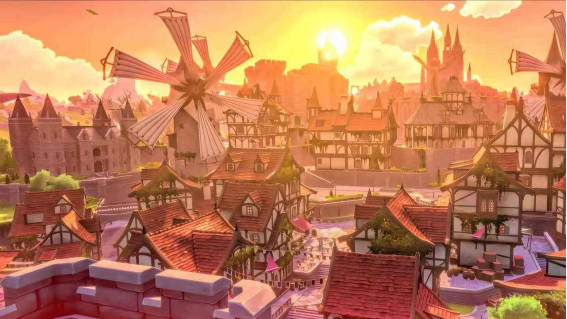
Mondstadt is often seen by players as the City of Freedom. Its real-world inspiration mainly comes from Central Europe, especially Germany, Switzerland, and the Alpine region.
The name “Mondstadt” has a clear German flavor and can be understood as “Moon City.” The timber-framed houses, pointed cathedral, plaza, windmills, and taverns inside the city can easily remind people of towns in southern Germany or Switzerland. Mondstadt's festivals also carry a strong sense of European folk tradition. Events such as Windblume Festival and Weinlesefest echo spring celebrations, wine culture, and town gatherings.
Dragonspine further strengthens the Alpine imagery. It is not only a snowy mountain area beside Mondstadt, but also provides the visual role of high mountains, cold weather, ancient ruins, and exploration. This makes Mondstadt more than a pastoral fairy-tale land; it also has the mysterious and harsh side often found in European mountain legends.
Liyue: China, Mountain Landscapes and Harbor Trade
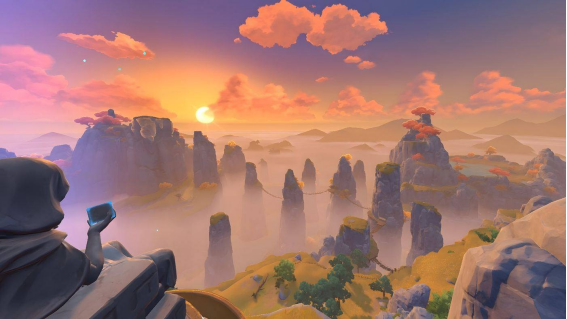
Liyue is the region in Genshin Impact with the clearest Chinese cultural features. Its mountains, rivers, harbor, architecture, festivals, music, food, and character names all draw heavily from traditional Chinese culture.
Liyue Harbor recalls ancient port cities and commercial centers. Contracts, credibility, trade, and order are key ideas in Liyue's narrative. Rituals such as the Rite of Descension, the Rite of Parting, and Lantern Rite also carry strong East Asian ceremonial color. In terms of landscape design, Liyue's karst formations, solitary peaks, sea of clouds, mountain paths, and pavilions easily bring to mind Guilin, Zhangjiajie, Huangshan, and other Chinese natural scenery.
What makes Liyue especially successful is that it does not stop at an “ancient Chinese style” surface. It combines commercial ethics, adepti legends, festival rituals, family and national relationships, and landscape aesthetics into a Chinese-inspired fantasy nation that feels both familiar and reimagined.
Inazuma: Japan, Shinto Shrines and the Idea of Eternity
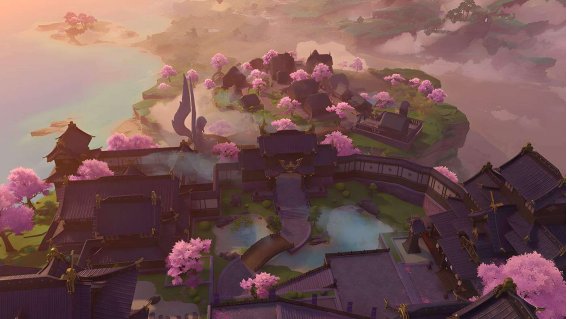
Inazuma's cultural prototype mainly comes from Japan, especially Edo-period political structures, samurai culture, and Shinto belief.
In terms of architecture, Inazuma features wooden houses, sliding doors, tatami, courtyards, torii gates, shrines, and cherry blossom forests. Its clothing and weapons also make use of elements such as kimono, armor, katana, and naginata. The Grand Narukami Shrine, Yae Miko, and fox-spirit legends correspond to shrine culture, miko imagery, and yokai traditions in Japanese Shinto and folklore.
The “Sakoku Decree” in Inazuma's main story also echoes Japan's historical isolation policy. The “Vision Hunt Decree” recalls historical acts in which rulers confiscated weapons and concentrated power. Inazuma's core theme is “eternity,” but the game does not present eternity as simple stillness. Instead, it shows conflict among order, fear, obsession, and change.
Sumeru: South Asia, Persia, the Middle East and Ancient Egypt
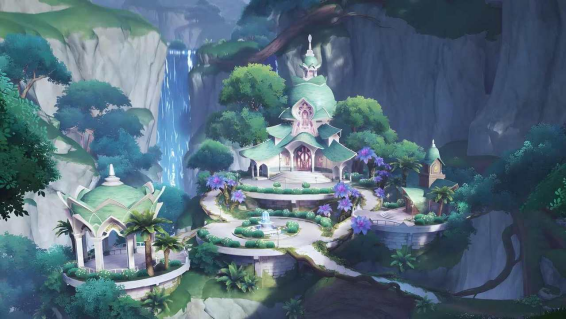
Sumeru cannot be matched to a single real-world country. It is more like a fusion of South Asian, Middle Eastern, Persian, and ancient Egyptian civilizations.
The rainforest area recalls the Indian subcontinent and South Asian culture. The name “Sumeru” itself is connected to Mount Meru, which holds an important place in Hindu, Buddhist, and Jain cosmology. The game's academic system, reverence for wisdom, plant ecology, and parts of its food and music also show South Asian influences.
The desert area clearly draws from ancient Egypt, Persia, and the Middle East. Pyramid-like ruins, the legend of King Deshret, desert kingship, oases, trade routes, and ancient writing systems give the other half of Sumeru a grand and mysterious ancient-civilization atmosphere.
Sumeru's defining feature is the tension between knowledge and faith. It is both a nation of scholars and a land where mythology and the legacy of ancient dynasties overlap.
Fontaine: France, Britain and Steampunk-Style Modernity
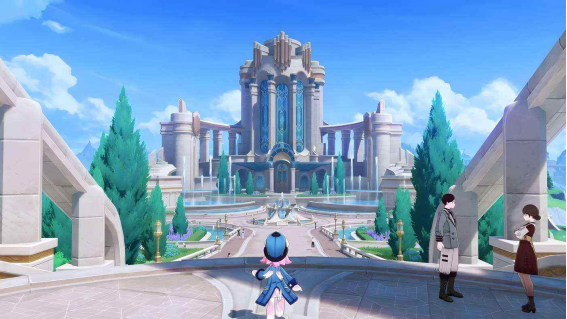
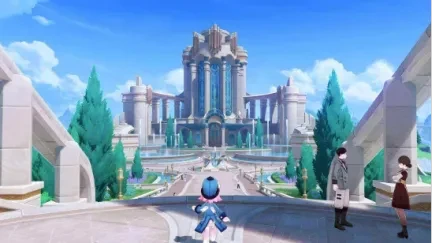
Fontaine's real-world inspiration mainly comes from modern Western Europe, especially France and Britain.
“Fontaine” itself is a French word meaning “fountain.” The region's urban character also feels French: opera houses, courts, elegant clothing, cafes, newspapers, public squares, and waterscape design all carry the aesthetics of French city culture. The judicial system surrounding Furina, Neuvillette, and other characters also gives Fontaine a natural sense of drama, institutions, and public performance.
On the other hand, Fontaine is not only romantic France. Its mechanical devices, clockwork mechanisms, industrial facilities, and energy systems clearly absorb the British Industrial Revolution and steampunk fantasy. As a result, Fontaine develops a distinctive character: elegant and orderly on the surface, but filled internally with technology, law, and social conflict.
Natlan: Indigenous Americas, Africa and Pacific Cultures
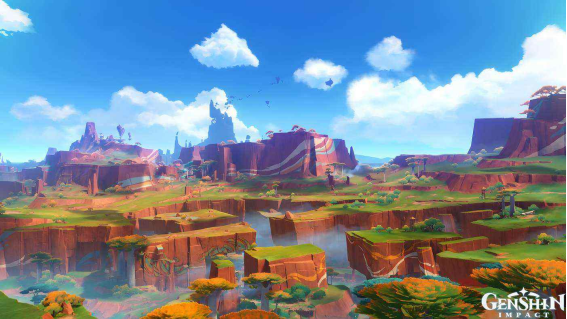
Natlan is one of the regions in Genshin Impact with the most complex cultural sources. It does not correspond to a single civilization, but mixes Indigenous cultures of the Americas, African cultures, Pacific Island traditions, and elements of modern street culture.
From its tribes, totems, terrain, music, and dance, Natlan absorbs many inspirations from pre-Columbian American civilizations, such as solar imagery, fire, warriors, rituals, and nature worship found in Maya and Aztec cultures. At the same time, some character names, musical language, and visual styles show influences from African and Pacific cultures.
Natlan's core keywords are fire, war, vitality, and competition. It is not as light as Mondstadt or as solemn as Liyue. Instead, it emphasizes physicality, rhythm, group belonging, and a passionate will to survive.
Snezhnaya: Russia, Eastern Europe and an Empire of Ice
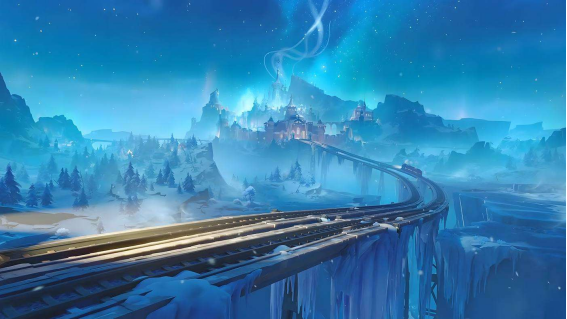
Snezhnaya still carries a strong sense of mystery in the game, but based on the information already available, its real-world inspiration clearly leans toward Russia and Eastern Europe.
“Snezhnaya” is related to the Russian imagery of snow, and the nation has long been associated with cold weather, military and political systems, strong centralized order, and the Fatui. Characters from Snezhnaya often carry Russian or continental European naming styles, while the Fatui Harbingers also use names from Italian commedia dell'arte masks. This makes Snezhnaya more than simply “snowy Russia”; it also has a more complex sense of European political theatre.
If Mondstadt represents freedom, Liyue represents contracts, and Inazuma represents eternity, then Snezhnaya seems to be a nation built around ideals, sacrifice, and power. Its full cultural appearance still awaits future official content.
Conclusion: Teyvat Is a Cultural Remix, Not a Real-World Map
The most interesting part of Genshin Impact's regional design is that it does not treat real-world cultures as simple decoration. Each nation extracts inspiration from architecture, music, food, language, clothing, geography, festivals, and historical systems, then recombines those ideas through Archons, main stories, and character destinies.
Mondstadt resembles a free city-state from a Central European fairy tale; Liyue is a fantasy expression of Chinese landscapes and commercial civilization; Inazuma blends Japanese history and Shinto aesthetics into the theme of “eternity”; Sumeru combines South Asia, the Middle East, and ancient Egypt; Fontaine joins French courtroom drama with British industrial fantasy; Natlan presents a passionate mixture of Indigenous American, African, and Pacific cultures; and Snezhnaya builds the shadow of an icy power through Russian and Eastern European atmosphere.
Because of these real-world cultural roots, Teyvat is not merely a beautiful open world. It feels like a fantasy journey across civilizations.